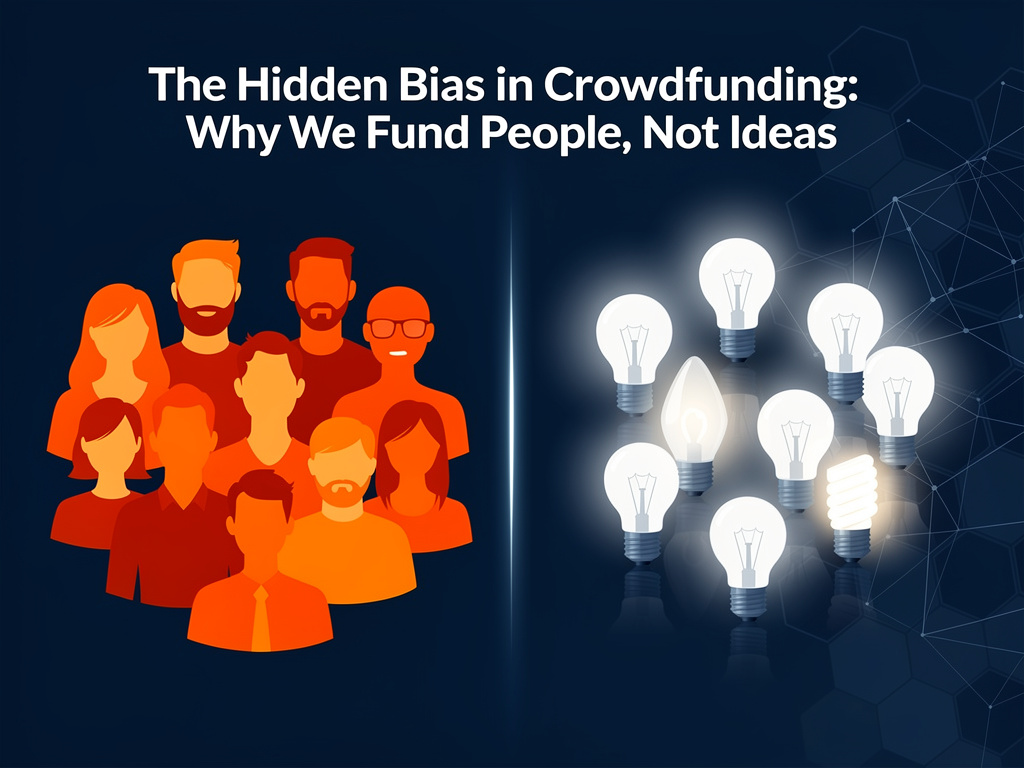
The Hidden Bias in Crowdfunding: Why We Fund People, Not Ideas
Crowdfunding platforms promise a level playing field—a place where the best ideas rise to the top, regardless of who’s behind them. But the reality is far more complicated. We don’t just fund ideas; we fund people. And that means bias, conscious or not, plays a huge role in which campaigns succeed.
The Problem: People Over Ideas
Study after study has shown that who you are often matters more than what you’re pitching. Here’s how bias sneaks into crowdfunding:
-
The Charisma Factor
- Campaigns with charismatic, confident founders raise more money, even if their ideas are no better than others.
- Example: A smooth-talking entrepreneur with a mediocre product can outperform a shy genius with a revolutionary idea.
-
The Attractiveness Bias
- Research from platforms like Kickstarter shows that attractive founders are more likely to hit their funding goals.
- Example: A study found that campaigns with good-looking founders received more backers and higher pledges, all else being equal.
-
The Gender Gap
- Women-led campaigns are less likely to get funded, even when their ideas are just as strong.
- Example: A Harvard study found that female entrepreneurs were 32% less likely to reach their funding targets than men.
-
The Race and Ethnicity Divide
- Campaigns led by people of color face an uphill battle. Black founders, for instance, are significantly underrepresented in successful crowdfunding campaigns.
- Example: A 2020 report found that only 4% of crowdfunding dollars went to Black-led projects, despite making up a larger share of the population.
-
The Age Bias
- Younger founders (especially those in their 20s and 30s) tend to attract more backers, while older entrepreneurs struggle to gain traction.
- Example: A campaign led by a 25-year-old might get more attention than one led by a 55-year-old, even if the older founder has more experience.
Why Does This Happen?
-
Trust and Relatability
- Backers are more likely to fund people they feel a connection to or trust. This often boils down to unconscious biases about who "looks like a winner."
-
The Halo Effect
- If a founder is attractive, well-spoken, or confident, we assume their idea must be good too—even if that’s not the case.
-
Social Proof
- Early backers often follow the crowd. If a campaign gains momentum because of a founder’s charisma, others pile in without scrutinizing the idea itself.
-
Media and Presentation Skills
- Founders who are good at pitching (or have professional videos and images) get more attention, regardless of their idea’s merit.
What This Means for Backers
If you’re investing in crowdfunding, you might be funding the wrong things for the wrong reasons. Here’s how to combat bias:
- Focus on the Idea, Not the Founder
- Ask: "Would I back this idea if the founder looked or sounded different?"
- Do Your Research
- Look beyond the pitch video or founder’s charm. Dig into the business plan, market potential, and team experience.
- Diversify Your Backing
- Consciously support underrepresented founders (women, people of color, older entrepreneurs) to balance out unconscious biases.
What This Means for Creators
If you’re running a campaign, bias can work for or against you. Here’s how to level the playing field:
- Invest in Your Pitch
- A polished video, clear messaging, and professional visuals can help overcome initial biases.
- Leverage Social Proof
- Early backers (even friends and family) can build momentum and attract others.
- Highlight Your Team’s Strengths
- If you lack charisma, emphasize your team’s expertise or past successes.
- Address Bias Head-On
- If you’re part of an underrepresented group, acknowledge it and turn it into a strength. Example: "As a woman in tech, I’m fighting bias—and building a better product because of it."
So...
Crowdfunding isn’t the meritocracy it claims to be. Bias is baked into the system, and that means great ideas can get overlooked while mediocre ones succeed because of who’s behind them. For backers, this is a reminder to think critically about where your money goes. For creators, it’s a call to work smarter to overcome the odds. The best crowdfunding ecosystem is one where ideas—not just people—get the funding they deserve.